
The American version of this question starts with a plug, because Tesla uses one of its own there. Australia never got that split. Australian Teslas have a CCS2 port, Destination units ship with a Type 2 cable, and both of those are the standard the rest of the market uses too. The plug tells you nothing here; the network label and the power do.
- Destination sites
- 42
- Median Destination
- 22 kW
- Supercharger sites
- 13
- Median Supercharger tariff
- A$0.70/kWh
What is the difference between a Destination charger and a Supercharger?
One is an AC box on a wall where a car sleeps. The other is a DC cabinet beside a highway where a driver waits. They share a company, an app and a name on the map, and nothing else that changes your day.
| Charger | Current | Plug | Power | Typical stop | Who sets the price |
|---|---|---|---|---|---|
| Destination | AC | Type 2 | 4–22 kW here; median 22 kW | 3–10 hours | The venue |
| Supercharger | DC | CCS2 | Up to 300 kW at the newest sites here; 8 of 13 are 43 kW combo posts | About 26 min to 80% | Tesla |
Power and time are typical figures, not a promise for a particular site or car. The Destination range and median are the sites in this directory that record a power rating; the Supercharger split is explained below.
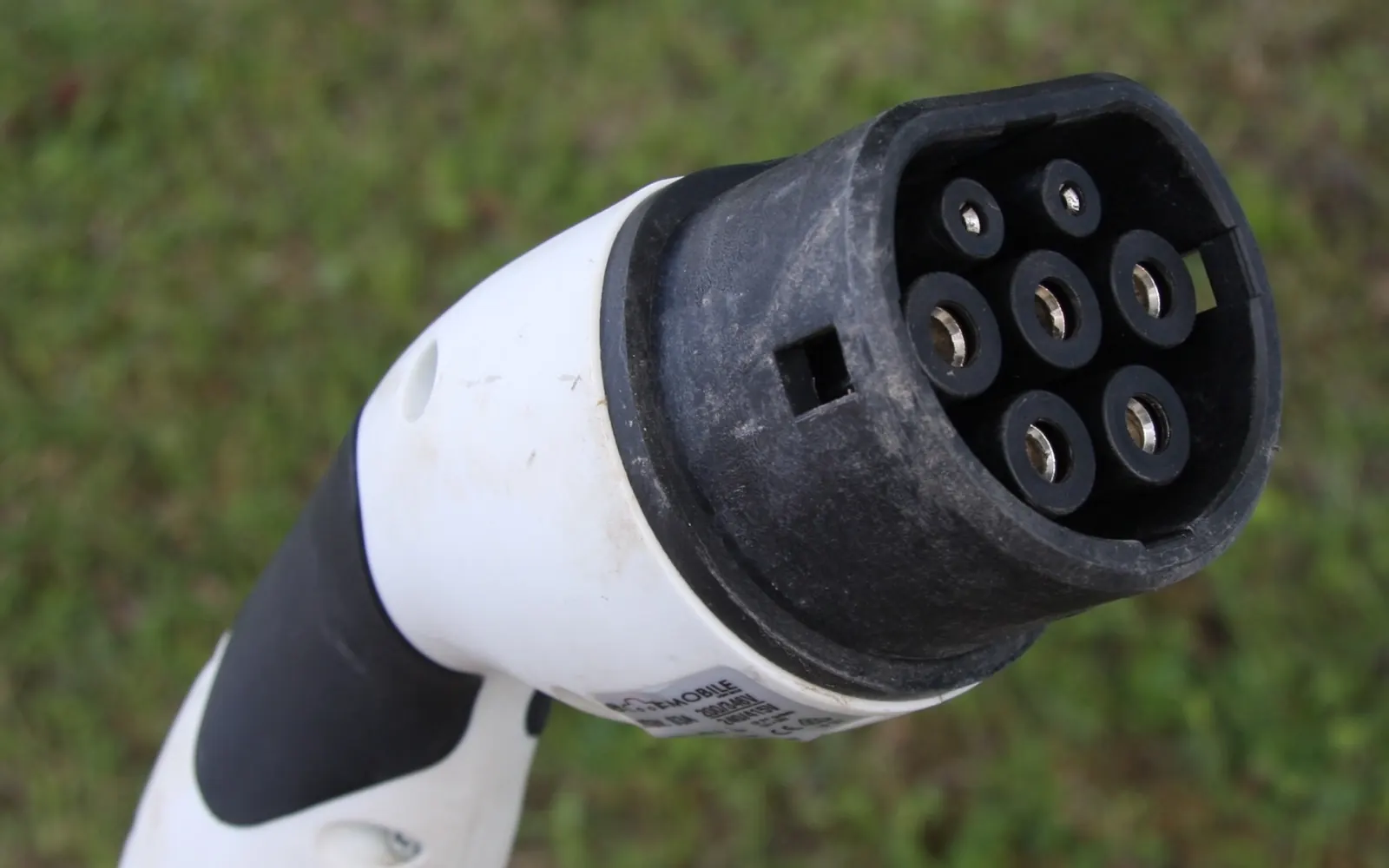
The plug is not the story here
A Supercharger post is CCS2, which keeps the Type 2 face and adds two DC pins underneath. That is why a Kia, a BYD or a Polestar can plug into one at all — and why the question for a non-Tesla driver is permission, not hardware. The CCS2 guide covers the shape, the cars and the sites.
The Destination side is the same story in reverse. A Type 2 socket or a tethered Type 2 cable is what almost every public AC point in Australia presents, Tesla's included, so an adapter is not part of the Australian routine the way a NACS adapter is on the other side of the Pacific. What varies is how the unit is configured at the venue.
What the directory actually holds
All 42 Destination sites here list a Type 2 connector, across 7 states and territories, with a median of 22 kW and a range from 4 kW to 22 kW. 6 of them also list a three-phase outlet, which is what a 22 kW car needs to draw the full rating. Only 2 list a tariff, at A$0.38 and A$0.45 per kWh; the other 40 list no price, which in practice means free or included in a stay.
The Supercharger set is smaller and less tidy: 13 sites in this directory, every one of them CCS2, 5 of them recorded at 150 kW or more (the highest is 300 kW) and 8 recorded at 43 kW. Those 8 are not a slower Tesla cabinet. They are early Australian sites built with a 43 kW Type 2/CCS2 combo post, and the record carries the post rather than the cabinet — which is exactly the trap this page is about.
Read the count carefully
Tesla's own Australian network is far larger than this directory: about 155 Supercharger locations by mid-2026, its thousandth post in June 2026 and its first full V4 cabinet in Sydney in October 2026 — Tesla's milestones, as reported by Zecar. 13 sites is what our source records, not what Tesla operates. Use the counts here for the shape of the network and Tesla's map for the whole of it.
Who sets the price
A Destination charger is the venue's to price. Most include it with the room or give it away to customers, which is why 2 of 42 sites here carry a figure at all. Where a price exists it is small: a per-kWh rate, sometimes a flat fee, occasionally a code from reception. The 2 that list one — A$0.38 and A$0.45 per kWh — come in under the Supercharger median; the other 40 list no price, which in practice means free or included in the stay.
A Supercharger is Tesla's to price, and Tesla publishes no national rate card: the rate is set per site and shown in the app before you plug in. Across the 12 priced Supercharger sites in this directory the median listed tariff is A$0.70 per kWh, ranging from A$0.59 to A$0.78. A survey of the network checked against the app on 5 October 2026 put it at A$0.55–0.75/kWh with the note “members pay less” — and that note is the whole story.
| Driver | What the rate is | What else applies |
|---|---|---|
| Tesla owner | The site's base rate, shown in the app before you plug in | Owners are members automatically; there is nothing to buy |
| Other EV, no membership | A higher pay-per-use rate at the same post | Set per site; about 13 c/kWh above the base rate, worked out below |
| Other EV, with membership | A$9.99 a month, then close to the base rate | Capped at 5 Supercharger sessions a day |
The two-tier structure and the session cap are Tesla's own, from its Australian support page and terms. The membership price and the app-checked band are EV Australia's, verified 5 October 2026. Tesla names no discount anywhere it publishes, so the figure below is arithmetic, not a quoted rate.
What the non-Tesla gap is worth
Tesla does not print the discount, so the only honest way to put a number on it is to work backwards from the fee. A month of membership has to cover 450 km of Supercharging before it pays for itself — the distance the October survey reports — and at this catalogue's median 6.0 km/kWh those kilometres take 75 kWh. A$9.99 divided by 75 kWh is about 13 c/kWh: 19% on top of the A$0.70 median tariff recorded here.
That is A$2.17 more for every 100 km, since 100 km takes 16.7 kWh at the same consumption. Over a year the fee is A$119.88; at A$2.17 per 100 km that is about 5,500 km of Supercharging — the 450 km a month the survey quotes, run the other way with the discount rounded to the cent, so it lands where it should rather than somewhere new. Below it, pay the walk-up rate; above it, the membership is the cheaper way to use the same post.
Can a non-Tesla plug in?
At a Destination charger, usually yes: the Type 2 plug fits, and the venue decides whether to allow it. Some units are configured Tesla-only, some ask you to check in at reception, and a few are behind a gate that needs a code. It is a property policy, so the station page and a phone call are worth more than the plug.
At a Supercharger the hardware is not the obstacle — CCS2 is CCS2 — but access is granted per site, through the Tesla app, and it has been rolled out progressively since 2023 rather than switched on everywhere. The oldest sites generally stay Tesla-only.
- The label. A station page names the operator. Tesla Destination and Supercharger are different networks under one brand, and the label is the reliable signal.
- The power. A Destination post is under 25 kW. A Supercharger is a DC cabinet, up to 300 kW at the newest sites — but check, because the early 43 kW combo posts are a Supercharger listing too.
- The location. Destination chargers sit where cars park for hours: motels, restaurants, wineries, car parks. Superchargers sit where a driver stops on the way through.
- The billing. A Supercharger session lands in the Tesla app. A Destination session is free, included, or paid at the venue's own rate.
How fast is that in kilometres?
The catalogue's median consumption is 6.0 km/kWh across 151 models, so a post's kilowatts convert to kilometres an hour like this — and the car's onboard charger caps the middle row, which is where most drivers actually live.
| Post | Car accepts | Kilometres an hour |
|---|---|---|
| 22 kW three-phase | 22 kW onboard charger | 132 km/h |
| 22 kW three-phase | 11 kW — the median car here | 66 km/h |
| 7 kW single-phase | 7 kW | 42 km/h |
| 43 kW combo post | 22 kW AC or 43 kW DC | AC rate on the AC side |
Kilometres are 6.0 km/kWh — the catalogue median — multiplied by the power the car actually accepts. Real consumption varies with speed, weather and load.
At the median car's 11 kW, a nine-hour overnight stop adds roughly 594 km, which is more than most drivers use in a week. That is the point of the Destination network: the speed stops mattering once the car is parked for the night.
Three things people get wrong
- “A Destination charger is a slow Supercharger.” It is not a fast charger at all. It is AC, and on a 22 kW post the median car here still takes 11 kW because its onboard charger is the limit.
- “Non-Teslas can't use Australian Superchargers.” They can at many sites, and the app tells you which. The gap is money — the non-member rate works out about 13 c/kWh higher — and the oldest hardware, which stays closed.
- “Free at the hotel means slow and pointless.” A free overnight charge at 11 kW covers about 594 km by morning. It is the cheapest kilometre you will buy all week.
Which one do you want?
- Parking overnight or stopping for a meal: a Destination charger, and ask the venue whether it is open to your car.
- Crossing a state or a long route: a Supercharger, because the stop is minutes and the corridor is built for it.
- No home charging: a Destination site near home or work can cover a commute, but confirm access and whether it is Tesla-only.
- Towing or a cold morning: expect a shorter range per hour and a slower fast stop; plan the next charger before you need it.
The one-line version
Destination is AC on Type 2 and the venue prices it; Supercharger is DC on CCS2 and Tesla prices it. The plug fits either way — what changes is the wait, the bill and whether you are allowed in.
The whole page in four lines
- 1Both Tesla networks in Australia use the standard plugs: Type 2 for AC, CCS2 for DC.
- 2Destination is an overnight stop at 22 kW median; a Supercharger is about 26 minutes to 80%.
- 3The venue sets a Destination price and usually absorbs it; Tesla sets the Supercharger tariff and charges non-Teslas more.
- 4Access is per site, through the app, and the oldest Supercharger hardware is still Tesla-only.