
MY24 · GT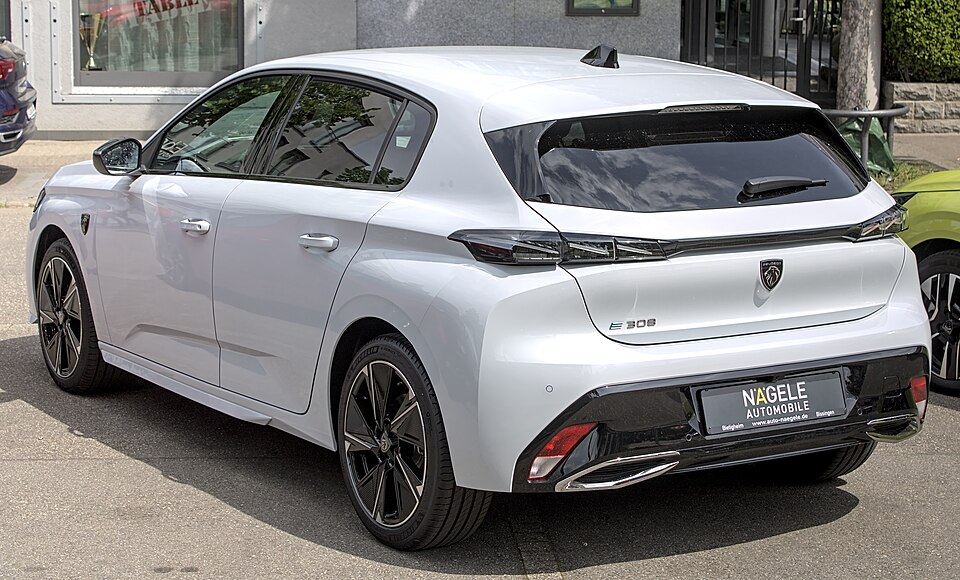
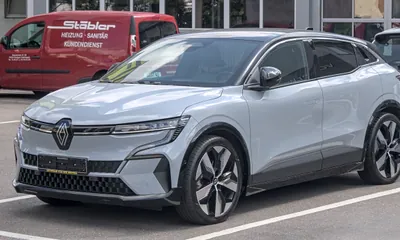
The Peugeot e-308 is rated 410 km on the WLTP cycle, the Renault Megane E-Tech 454. A 10–80% stop takes 29 minutes in the Peugeot e-308 and 37 in the Renault Megane E-Tech. Every figure below names the badge it belongs to, and the three tools further down turn the same numbers into a charging race, a road trip and a yearly bill.
At a glance
Peugeot e-308 · GT
410km WLTP
29min 10–80%
A$61,000from
Renault Megane E-Tech · Techno
454km WLTP
37min 10–80%
A$54,990from
The short answer
The Renault Megane E-Tech is rated 454 km against 410 — 44 km, 11% further. It uses 13.2 kWh to cover 100 km where the Renault Megane E-Tech needs 13.3.
A 10–80% stop takes 29 minutes in the Peugeot e-308 and 37 in the Renault Megane E-Tech. On a 50 kW post it is 45 and 50 minutes, so most of the advantage disappears at a slow site.
The Renault Megane E-Tech makes 160 kW against 115.
Which one, in one line
Pick the Peugeot e-308 ifit wins on running cost (13.2 kWh per 100 km against 13.3), charging (29 minutes against 37).
The priceThe Renault Megane E-Tech is the cheaper to buy, listed from A$54,990; both are list prices before on-road costs and incentives.
Hatchback · 60 kWh · CCS2
Charging, raced
Charging speed is a station number and a car number, and the smaller one wins. Set the post and both cars fill against the same clock — the interesting part is not who wins, it is how much of the gap a slow post takes away.
Each car is modelled on its own published 10–80% time, which gives an average power over that window: 78 kW for the Peugeot e-308, 68 kW for the Renault Megane E-Tech. A post above that average changes nothing; a post below it sets the pace.
At 150 kW, going from 10% to 80% takes 29 min in the Peugeot e-308 and 37 min in the Renault Megane E-Tech — a gap of 8 minutes. Both cars are limited by their own packs at this post, so a bigger station would change nothing.
Every figure
A tick marks a figure that is simply more useful — more range, less energy per 100 km, a faster stop. Rows without a tick are different, not better: a bigger battery, a taller body and a heavier car are all trades, and this page does not pretend otherwise.
| Measure | Peugeot e-308 | Renault Megane E-Tech |
|---|---|---|
| Range and efficiency | ||
| WLTP range | 410 kmMY24 GT | 454 km✓MY24–MY26 Techno |
| Efficiency | 7.58 km/kWh✓ | 7.52 km/kWh |
| Energy per 100 km | 13.2 kWh✓ | 13.3 kWh |
| Battery | 54 kWh | 60 kWh |
| Charging | ||
| DC peak | 100 kW | 130 kW✓ |
| 10–80% at peak | 29 min✓ | 37 min |
| Average power, 10–80%(derived) | 78 kW✓ | 68 kW |
| AC maximum | 11 kW | 22 kW✓ |
| Fast-charge plug | CCS2 | CCS2 |
| AC plug | Type 2 | Type 2 |
| Size and weight | ||
| Length | 4,367 mm | 4,200 mm |
| Width | 1,852 mm | 1,768 mm |
| Height | 1,465 mm | 1,505 mm |
| Kerb weight | 1,620 kg | 1,636 kg |
| Space and practicality | ||
| Seats | 5 | 5 |
| Boot | 412 L | 440 L✓ |
| Performance and warranty | ||
| Power | 115 kW | 160 kW✓ |
| 0–100 km/h | 9.8 s | 7.4 s✓ |
| Drive | FWD | FWD |
| Battery warranty | 5yr unlimited km / 8yr 160,000km battery | 5yr 100,000km / 8yr 160,000km |
| Price | ||
| Starts at | A$61,000list, before on-road | A$54,990✓list, before on-road |
| Dearest version | A$61,000 | A$54,990✓ |
| Per km of WLTP range | A$148.78/kmcheapest version | A$121.12/km✓cheapest version |
| Drive-away | A$64,000–A$67,500where the feed lists it | A$58,000–A$61,000where the feed lists it |
How to read the mixed rows. Range, efficiency, battery and charging come from one badge — the longest-range version of each car's current model year, not the longest range it has ever been rated at. The catalogue stores one record per badge, so where two figures come from different badges the row names the one it used.
What WLTP is not. It is a laboratory cycle at a fixed temperature, with the air conditioning off and a gentle acceleration profile. It exists so two cars can be compared on the same test, not so a driver can predict a highway run. Expect less on a 110 km/h trip, and less again in winter.
What this page does not claim. No ANCAP crash rating: the catalogue carries none, and a column of dashes would read like a failure rather than a gap. Prices are manufacturer list before on-road costs; the drive-away band appears only where the feed publishes one.
Your numbers
Two questions decide most purchases: how often you stop, and what the year costs. Both are arithmetic on the figures above, so change the inputs and the answer changes with you.
Starts full, arrives at 10%, charges back to 80% at each stop, and assumes a highway range of 85% of the WLTP figure.
stops · 87 min charging
stops · 111 min charging
Energy at the wheels from the WLTP label, priced at the tariff you pay. Home charging is usually cheaper than the directory's median.
A$7 per 100 km
A$7 per 100 km
The trip model ignores charger detours, queueing and the last 10% of the pack, which is slow on both cars. The yearly cost is energy only: no session fees, no idle fees, no home-charger installation, and no petrol car to compare against.
Your priorities
There is no single winner, only a winner for a set of priorities. Move the sliders and the weighting changes — nothing here is a magazine score, and the page never hides the numbers it is built from.
Weighted result
wins 4 of 6 measures on these weights
Each measure is scaled between the two cars, so a weight of 5 means “this is the thing I care about” and 0 means “I do not care at all”. The scores are relative, not a rating out of ten.
Questions
Every figure here comes from the same data as the rest of the page. Where the data cannot answer, the page says so instead of guessing.
Still unsure about a term? The connector guide covers the plugs, and the vehicle guide the rest.
The Renault Megane E-Tech. The Peugeot e-308 is rated 410 km and the Renault Megane E-Tech 454, each on the longest-range badge of its current model year — MY24 GT and MY24–MY26 Techno respectively. WLTP is a laboratory cycle run at a fixed temperature with the air conditioning off, so treat the figure as a way to compare one car with another rather than a prediction for a highway run in summer.
The Peugeot e-308. Going from 10% to 80% takes 29 minutes in the Peugeot e-308 (100 kW peak) and 37 in the Renault Megane E-Tech (130 kW peak). At a slow post the station becomes the limit and the gap narrows, because the slower car is short of power rather than short of time.
Yes. Both list CCS2 for DC fast charging, so either car can use the same sites without an adapter. An adapter still cannot raise the power a car will accept.
The Peugeot e-308, by about A$7.50 a year at 15,000 km and A$0.50 per kWh. It uses 13.2 kWh per 100 km against 13.3. That is energy only, at the wheels: session fees, idle fees and home-charger installation are not in it.
The Renault Megane E-Tech: 412 L of luggage space against 440 L. Makers measure boot volume by different conventions — some to the window line, some under the parcel shelf — so read the direction as reliable and the size of the gap as indicative.
The Renault Megane E-Tech is the cheaper of the two, listed from A$54,990 against A$61,000 for the Peugeot e-308 — A$6,010 between the two starting prices. Both are manufacturer list prices before on-road costs, options and any incentive, so a dealer's drive-away number will differ.
Every figure on this page comes from the same records the Peugeot e-308 and Renault Megane E-Tech pages use. How the sources are chosen, and what a figure here never claims, is on the methodology page.